


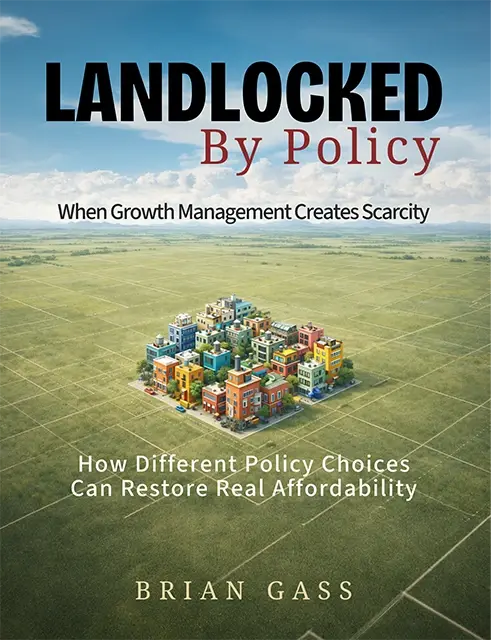
It's not personal.
It's policy.
Washington's housing crisis wasn't caused by market forces, population growth, or greedy landlords. It was built — deliberately — through thirty years of regulatory decisions. This book names them.
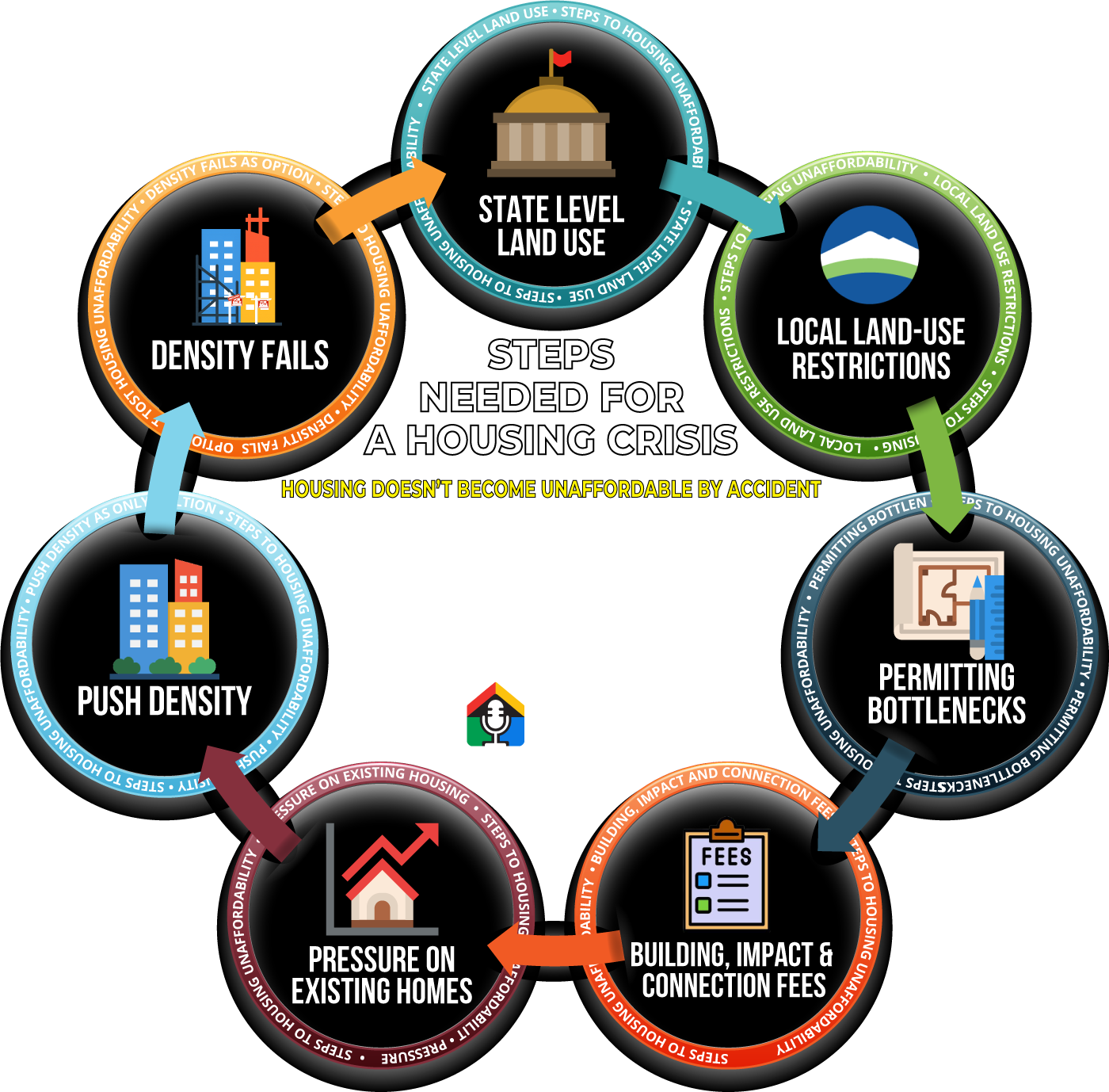
Housing doesn't become unaffordable by accident.
It happens through a sequence of state laws, local land-use decisions, permitting restrictions, mounting fees, and policy choices that limited growth while increasing costs. When these pressures compound, they create a system where prices rise faster than incomes — and where density becomes the only option left, even though it doesn't deliver affordability.
Supply can't respond.
When prices doubled in Bellingham, standard residential lot supply fell 50–56%. The market tried to respond. The policy blocked it. This is not a market failure. This is a regulated outcome.
Restricted land always costs more.
Population grew by double digits. Available land grew by single digits. More people chasing fewer lots can only move prices one direction — not temporarily, but permanently, until the restriction is removed.
Your income is running backwards.
Washington's median household income is still below 2019 levels. State revenue hit an all-time high in the same period. The family earning less in real terms is competing against an asset that's gained value every year.
You cannot run fast enough to board a moving train. And no one is slowing it down — because the people controlling the throttle collect more revenue every time it accelerates.
Brian Gass — founder, Real Housing Reform Initiative.
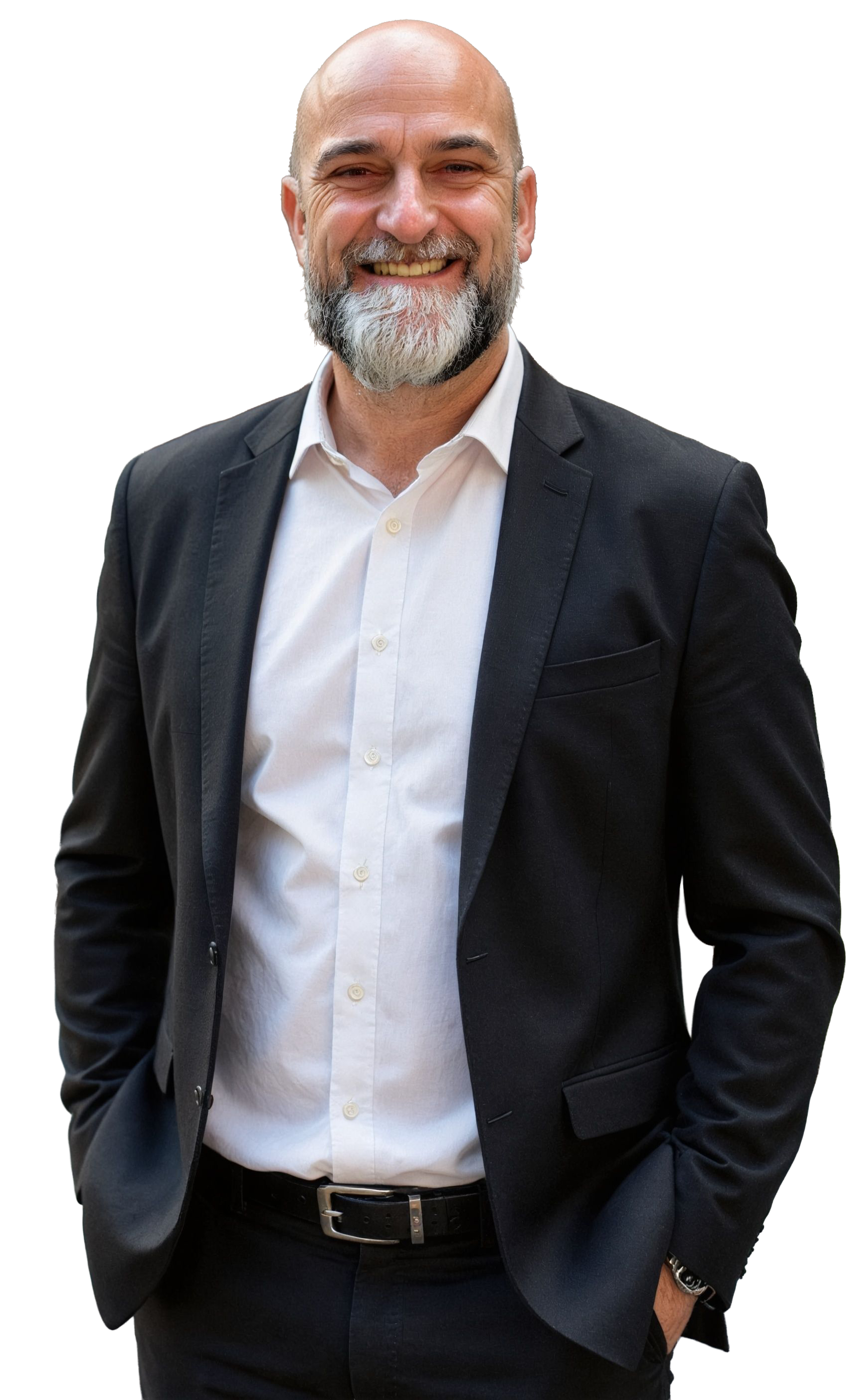
Brian Gass is a real estate agent and Designated Broker of ONE Real Estate Inc. After years of working directly with buyers, sellers, and builders, he saw how housing affordability was slipping out of reach for average households — not because people stopped working hard, but because the system governing housing had quietly changed.
In response, he founded the Real Housing Reform Initiative, a 501(c)(3) nonprofit focused on reexamining how housing is planned, priced, and regulated. Through research, policy analysis, and practical reform models, the organization works to restore housing affordability by expanding choice, aligning costs with incomes, and reconnecting housing policy to real-world outcomes.
"Housing didn't become unaffordable by accident, nor did it happen overnight."